Posts

Lord Krishna, His Lilas and Teachings - 7. Sri Swami Sivananda

Image
08/11/2018 End of Parikshit :- Once upon a time Parikshit went on a hunting excursion. He got fatigued and felt intense thirst. So he entered the cottage of the sage Samika. The sage was absorbed in meditation and so he was not aware of the presence of the king. Parikshit was very much annoyed that the sage did not treat him with hospitality. Further, he was very much tormented by hunger and thirst. He thought, “This sage is pretending to be absorbed in contemplation in order to avoid the usual courtesies and the ordinary hospitality due to me. He is showing his contempt to me.” Then he picked up with the edge of his bow the carcass of a serpent, threw it as a garland over the neck of the sage and walked away. The youthful son of the sage, Sringi, who was playing on the bank of the adjoining river with other boys, came to know from some playmate that King Parikshit had put a dead serpent over the neck of his father. He cursed the king and said that the serpent Takshaka shoul...
Transitional Issues in the Move from Separate Judicial Process to Centralised Judicial Process in the State : Sri Aurobindo.

Image
08/11/2018 The king, sovereign, monarch, chief executive of the State assumed powers primarily initially in external affairs, including military and international relations and only later, in the consolidation of power, began to bring together the various economic, legislative and judicial powers internal to the State.  The judicial power previously tended to be diffused in local or even ad hoc bodies, where citizens or leaders within smaller sub-units of the State, such as clans or tribes, would for a judicial council or act as the key decision-maker for judicial needs.  This inevitably caused judicial process to be localized and diverse in its application within the larger nation.  Eventually, the drive towards centralisation, however, brings the executive power to look at how to consolidate and make uniform the judicial functions. Sri Aurobindo observes:  “Human societies, therefore, in their earlier development retained for a long time an aspect of great ...

Parenting & Spirituality : Swami Bhoomananda Tirtha

Image
Narayanashrama Tapovanam 24/10/2018 While to some extent desire and consequent burdens are quite usual with household life, the fact remains that this plight robs away the very purpose and fruition of the householder. The question is: Do you like such a plight? If you do not, the straight answer will be: be free of undue desire and the burden it fetches. Learn to live in peaceful harmony and welfare. Desire of any nature always constricts the mind. Such constriction disables the mind to express itself fully, healthily, and harmoniously.Understand this mental truth and always think of avoiding desires and the consequent torments. In reality, it is not desire but something else far higher that should verily work in the human. The truth about it will be known only through right exposure and enlightenment. To have a child is to be happier. With the child and the consequent involvement, if the very objective of happiness is adversely affected, is there not something wrong in ou...

Karma Yogam : Swami Nikhilananda Saraswati

Image
Chinmaya Mission Tri State -Cranberry 24/10/2018 The first step to preparing the mind, the first step on the path of spirituality is karma yoga. The beauty in is that even if one does not reach the ultimate goal, walking on the path itself will give great joy and great peace. What is karma yoga? As a human being, we have obligations towards ourselves, the family, society, nature, ancestors, the environment, and, of course, God. We have responsibilities towards all of these and fulfilling them is very important. Another vital aspect about karma yoga is that one should discharge these responsibilities as worship of Ishvara. When I start doing my duties for the Lord, I start enjoying them. No doubt, the subsequent result will come, but Sri Krishna tells us to try and relish the work itself. The result, when it comes, should be accepted gracefully. When the attitude - the principal factor is of worship, working itself will give immense happiness and contentment. The Bhagavad-g...

We Connect Differently To A Personal God : Swami Tejomayananda

Image
Chinmaya Mission Atlanta 24/10/2018 Sri Rama was the maryadapurushottama, the ideal man. The purpose of his avatara was to teach us how to live. On the same day, three other mahapurushas, his brothers, were born. Their goal was different. They taught us how to love and their importance should not be underestimated. We must remember to pray to these great devotees, because the path to discover bhakti in our hearts, is only through the grace of the bhakta. The relationship of each of the brothers with Rama was different. In the Bala Kanda portion of Sri Ramcharitmanas, Tulsidas uses simple analogies to describe the bond they individually shared with Rama. Bharata’s relationship with Rama is described as the love of a bee for a flower. The bee and the flower, by virtue of their very being, are not always in physical proximity. However, whether they are together or not, the bee enjoys the nectar, the very essence of the flower. In the same way, even though he was not always wi...

True wealth is our own skill of being creative, soft and humorous in words and positive in reactions : Swami Udit Chaithanya

Image
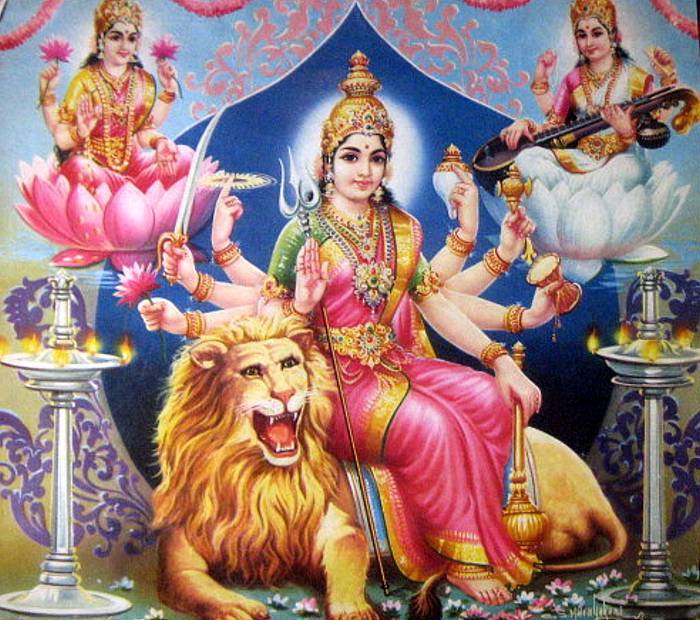
23/10/2018 Navaratri is a festival full of lights, colour, Joy and festivity. Everywhere there is a mood of devotion and enthusiasm .This festival is spread over nine nights and ten days during which time communities and families get together. During this festival people invoke the blessings of the three Goddesses, Durga, Lakshmi and Saraswati. Durga represents the quality of strength, Lakshmi represents prosperity and Saraswati represents knowledge. Goddess Durga or Shakti, symbolises the energy of the Universe in her 9 beautiful forms. Durga is not a “female God” but the embodiment of enthusiasm, motivation and inspiration in us. We all want to achieve wealth in our life. What is the highest wealth or prosperity one could possibly achieve? To do that we need to overcome the Demon of inertia or laziness in us called “Mahishasura”. To kill him, we need to invoke the Durga or Kriya sakthi in us. Only if the Mahishasura of inertia is killed by the Durga of motivation and enthus...

Lord Krishna, His Lilas and Teachings - 6. Sri Swami Sivananda

Image
23/10/2018 6.The Bhagavata Puranam The Puranas hold a unique place in the history of religious literature of the Hindus. They contain mine of knowledge and information on all philosophical and religious topics. Srutis or Vedas cannot be easily understood by the common people. So the all-merciful Vedavyasa composed the eighteen Puranas for the benefit of mankind and explained in an easy way the subtle truth and the deep problems of the Srutis. They are indeed an encyclopaedia of Hindu religion and ethics. The Puranas contain fables, fairy-tales, philosophy, religion, myth and legend. A Western reader can hardly appreciate the teaching and value of our Puranas unless he is conversant with the methods employed by the Indian Rishis in inculcating the truths of philosophy and religion. The task of the Puranas is to popularise the Vedic truths by means of narratives, stories and anecdotes. Bhagavatam is a practical guide for all. It teaches that God-realisation alone can give s...